The Stretching Habit Dancers Don't Need
Aug 29, 2026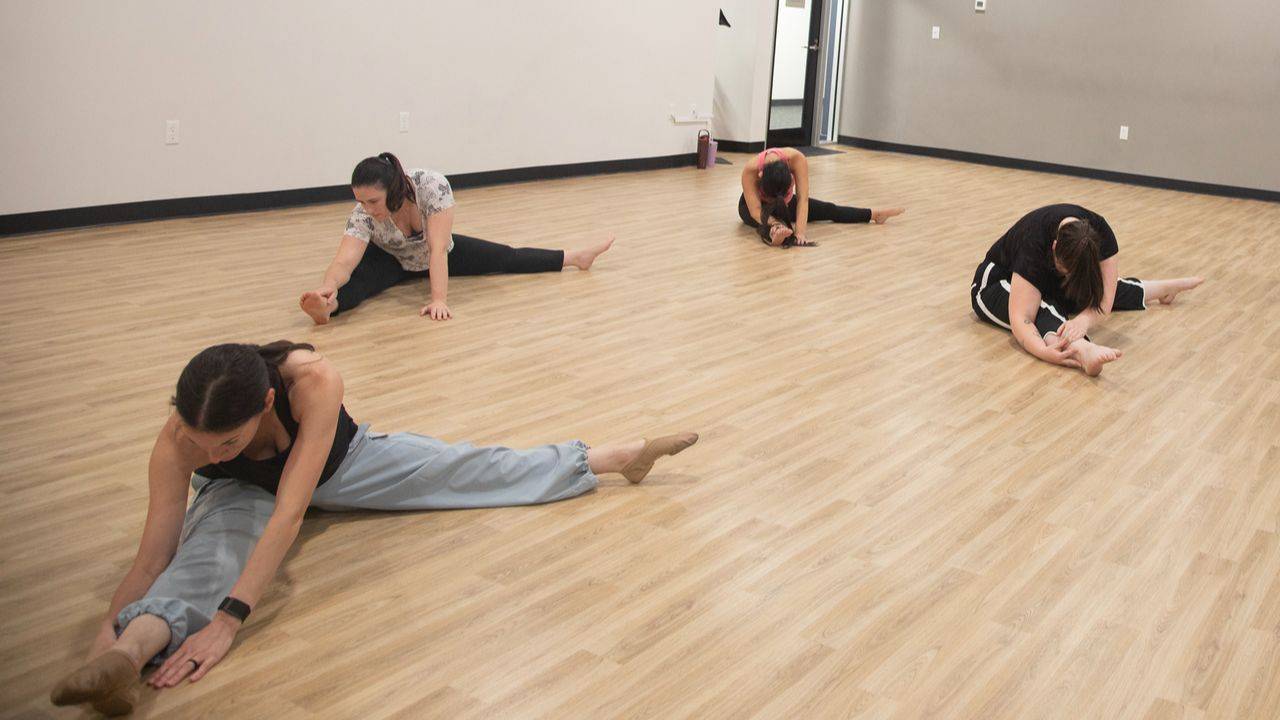
I see it all the time in dance class and often catch myself in the habit as well. During warm-up, you’ll often find dancers pointing their feet in certain stretches. For some with an intense ballet or contemporary background, this is so ingrained that it’s just a force of habit instead of a conscious decision.
In dance, we tend to hyper-focus on the aesthetics of foot position instead of what’s happening in the muscle and nervous system. Because we often point our feet in stretches out of habit, that aesthetic cue changes tension patterns and makes the stretch less effective.
If we’re only doing it for aesthetics and understand stretching is not a performance…what are we doing it for?
Extension is Tension
The body is a kinetic chain. Changing one part (foot) affects tension upstream or downstream. When we cue the toes, we often end up gripping through the calves instead of letting them release.
The nervous system can perceive this as tension and trigger protective contraction elsewhere, reducing the effectiveness of the stretch as it sends tension to the wrong area.
Let’s look at the muscle chain:
-
Posterior chain: This goes from calves to hamstrings to the lower back. Over-engaging foot muscles changes ankle dorsiflexion/plantarflexion aka, the up and down motion you activate to point or flex your foot. , This chain, in turn, alters hamstring and glute tension.
-
Anterior chain: pointing toes in a quad stretch can over-contract the tibialis anterior, which is located just beneath your shin, changing the stretch signal in quads or hip flexors.
Nervous system involvement:
Your nervous system gets involved when the myotatic reflex activates. Pointing the toes sends too much tension to your distal, or foot, joint. This reflex travels upstream and reduces the efficacy of the stretch itself.
Cues that aren’t relevant to the muscle you’re targeting send a signal to your nervous system to ‘guard’ other areas. This is called protective tension. Your focus—even subconsciously—tells your body to tense up in areas we’re actually trying to relax when we stretch.
Fascia & connective tissue:
Fascia is a thin sheet of tissue that encloses your muscles. A subtle change at the toes can alter fascial tension along the entire leg. This can make the stretch feel “off” or put strain in places you never intended.
The Intentional Caveat
Here’s the one caveat I have for this: if you intend to engage your sciatic nerve, pointing and flexing your toes is great. This is known as nerve flossing.
To put it simply, nerve flossing in a hamstring fold allows you to engage the largest nerve in your body: the sciatic nerve. It runs from the back of your leg all the way up your back. Engaging in flexion, then releasing, can help you move through the sensation known as nerve flossing.
There are many benefits to this, but I’d love to get into this more deeply in a separate post.
Test & Validate
I don’t want you to blindly believe everything I’m saying. I encourage you to test this for yourself, to let your body feel the difference.
Compare stretches with foot cues vs neutral foot:
-
Try a hamstring stretch with pointed toes, then try one with relaxed feet. Notice where tension is felt.
EMG studies (if you want to reference research):
-
Look for studies on hamstring or calf EMG activity during different foot positions. Over-activation in non-target muscles supports your point. You can start here.
This phenomenon comes from years of habit building. It’s not gonna disappear overnight. But the awareness of these habits can make the practice of stretching much more intentional.
Oh and if you wanna start dancing and learning fun things like this along the way, come try a class at Common Ground (it's only $30 for your first week of unlimited classes).
Stay connected with news and updates!
Join our mailing list to receive the latest news and updates from our team.
Don't worry, your information will not be shared.
We hate SPAM. We will never sell your information, for any reason.